Posts Tagged ‘Scuba Cat Diving’

Multi Level Dive Planning

Posted on April 8th, 2012 by admin-scubacat-dw  |  Comments Off on Multi Level Dive Planning

What does that mean? When on dive boats sometimes you have divers on there who look at their computers and don’t know how to interpret what it is telling them.

The first thing you should do when buying a new piece of dive equipment is be trained on how to use it. With computers this means reading the instruction manual, and knowing what the numbers mean. The best way to do this is by taking the Multilevel Diver Speciality  which incorporates how to use dive computers. This means you don’t switch your brain of just because there is a dive computer on your wrist.
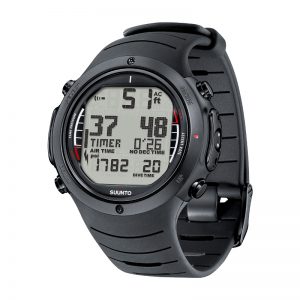
Scuba Cat Diving  5 * CDC Phuket Thailand

Dive Computers

So what are the benefits of the Multilevel Speciality?

It allows you to extend your bottom time by planning your dives in a slightly different way to what the RDP tables show you.

To be able to do this you would use the eRDPml, this will allow you to plan a dive safely within the RDP guidelines, then follow your plan using your dive computer. By doing the dives this way you will have several benefits:

Scuba Cat Diving Phuket Thailand  Speciality Courses

eRDPml

If your computer fails then you can still dive using the eRDPml as all your dives are planned before going into the water

It allows for proper dive planning, computers will allow you to dive in a way that is not recommended, and if you follow them blindly without knowing the theory behind what you are doing they will give you penalties for subsequent dives.

You learn the safety procedures for planning multilevel and computer dives.

By planning dives as multilevel dives and following your plan you will gain credit for the slower nitrogen absorption rates as you ascend during the dive. Most divers already dive in this way, so it is just a matter of gaining credit for what you are actually doing anyway.

During the Multilevel course you will learn about dive planning, organisation, dive techniques and potential problems. You need to take into consideration aspects such as air consumption, topography and temperature to come up with a realistic plan that will maximise the enjoyment of the dive. With the eRDPml the planning is simple and then you just need to follow that plan underwater. It is important to understand the concept behind the dive plan and use your computer to help you follow this, rather than allowing the computer to dictate the dive. Computers estimate the time remaining underwater, and are a guideline or calculator that reads depth and time accurately. They have very limited dive planning functions which is why you need to plan the dive first using the eRDPml.

During the Multilevel diver course you will learn more about safety stops, decompression theory and the care and maintenance of your dive computer.
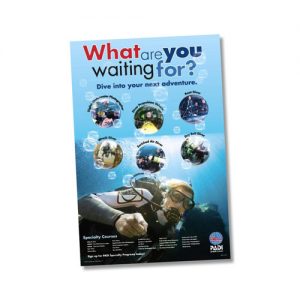
Scuba Cat Diving Phuket Thailand  Specialities

So what are you waiting for, sign up for your Multilevel Diver Speciality today………become a SAFER Diver and continue your adventure
Do’s and Don’ts in Thailand

Posted on April 6th, 2012 by admin-scubacat-dw  |  Comments Off on Do’s and Don’ts in Thailand

A quick guide to some of the Customs in Thailand

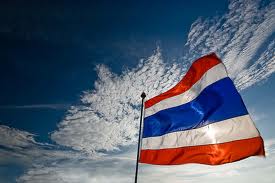
THE THAI FLAG

Scuba Cat Diving Phuket Thailand Do's and Don'ts in Thailand

Thailand is a very patriotic Nation and the Thai national flag will be seen on display just about everywhere in Thailand. It isn’t just government buildings that fly the flag because it will be seen on boats, tuk-tuks, roadside stalls, private businesses and private homes. The flags may sometimes be slightly damaged or faded by exposure to the elements, but they are still a proud symbol.

The meaning of the Flag:

Red = Nation: the stripes represent the blood spilt to maintain Thailand’s independence.

White = Religion: the stripes stand for purity and are the colour of Buddhism, which is the country’s main religion.

Blue = Monarchy, blue is Thailand’s national colour and it represents the Thai monarchy.

Thai Flag History:

The current Thai flag was adopted on September 28, 1917, making it one of the world’s older flags. From the mid-19th century until 1916, Thailand, which was called Siam until 1939, used a red-based flag with a white elephant on it. That flag was replaced in 1916 with a red-white-red-white-red horizontal striped flag, which was modified in 1917, when the blue centre replaced red.

Interesting Facts:

The Thai flag is called Triaranga or Triarong, which literally means ‘tricolor’.

The Thai flag may be seen alone or it may be flown with other flags, which have their own meaning. For instance, the National Flag may be flown alongside a yellow flag with the Royal Insignia. This is the King’s flag with yellow representing the King as he was born on a Monday. Similarly, Queen Sirikit has her own flag, which is blue (she was born on a Friday) with her own individual Royal Insignia.

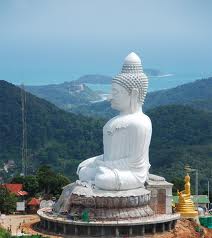
BUDDHA

Be respectful about Buddhism. Dress correctly in Temples. Don’t sit on Buddha images, sit before them with feet pointing backwards. Don’t misuse a Buddha image. Icons should be kept in a place of worship and not used as furniture or ornaments.

Scuba Cat Diving Phuket Thailand Do's and Don'ts in Thailand

THE ROYAL FAMILY

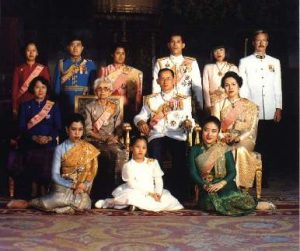
Thailand is a Constitutional Monarchy. King Rama IX, HM King Bhumibol and his family are totally revered. You will see images of the Royals everywhere. Always stand when the National Anthem is being played, for example, at the cinema before the film starts. Do not make disparaging remarks about the Royals. There is a strict lese majeste laws and offenses can be punishable by imprisonment.

 Good_Royal_Family

MONKS

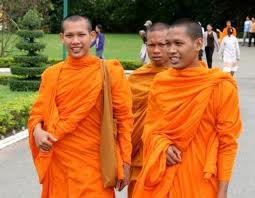
Monks are commonly seen in Thailand. The majority of males in Thailand would have experienced being a monk at some time in their life. Monks are recognized by their saffron robes. Women should not touch or hand anything directly to a monk. Also a woman should not be alone in the presence of a monk.

 Scuba Cat Diving Phuket Thailand Do's and Don'ts in Thailand

THE WAI

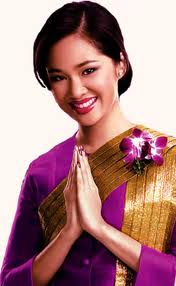
Thai people do not shake hands. They will greet you with a Wai, which is a prayer like gesture at chest or head level with head slightly bowed. This gesture is not only used as a greeting but also for respect or for reverence if performed in front of a Buddha image. Respect is demonstrated by the height at which the hands are held and how low the head comes down. It can also be used to express thank you or goodbye. The Wai is not used for children and people junior in age or status will always offer the Wai first. If someone Wai’s you, do not be frightened to respond.

Scuba Cat Diving Phuket Thailand Do's and Don'ts in Thailand

HEAD AND FEET

Do not touch a person’s head or ruffle their hair. The head is considered to be the highest and the purest part of the body. Do not touch the head or ruffle hair. Apologize if you accidentally touch somebody’s head.

Feet are considered spiritually as well as physically the lowest part of the body. It is highly disrespectful to point feet at someone or to pick things up with the feet. Do not wave your feet around someone’s head. If you should touch someone accidentally with your foot, apologize. Stepping on Thai currency with the King’s Head or sitting in the temple with feet pointed to a religious icon is considered sacrilegious. Stepping over food is also a huge faux pas!!!

FOOTWEAR

Always remove footwear before entering a house or temple.


DRESS CODE

Dress respectfully. If visiting Temples then cover up! Topless sunbathing is frowned upon in Thailand.

TABLE MANNERS

Eating in Thailand is a social event. It is normal to have several dishes for everyone to try. Once you are full leave a little food on your plate as this signifies that you have finished. If you empty your plate your host will think that you have not eaten enough. Thai’s eat with a fork and spoon, occasionally they will eat noodles with chop sticks. Do not lick your fingers!! If you need to get the waiter/waitresses attention then don’t call them with the fingers of the hand pointing up. This equates to raising the middle finger in Western society. Turn the hand so the fingers are pointing down and beckon.

DO NOT GET ANGRY

Thais are non confrontational. Public disputes or criticism are to be avoided at all costs. Raising your voice or loosing your temper will never be constructive in Thailand. Loss of face is a disgrace to a Thai, so they try to avoid confrontation and look for compromises in difficult situations.

AFFECTION

Public displays of affection are frowned upon in Thailand.

The History of Phuket

Posted on April 5th, 2012 by admin-scubacat-dw  |  Comments Off on The History of Phuket

Phuket was known as Bukit, Junk-Ceylon or Muang Talang. Bukit is the name that derives, in meaning from the Tamil Manikram or Crystal Mountain. Junk- Ceylon is the name that was found on all the old maps (Ptolemy’s Geographical), written by the Greek, Alexandrian, the Geographer. In the third century A.D. and it was also named Muang Talang from the part of the Srivichai and Siri Tahmarach empires. It was also called Monton Phuket in Rama V’s reign.

Scuba Cat Diving Phuket Thailand

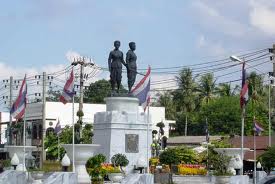
Heroines Monument.

The most important historic event is the story of two heroines. Thao Thep Kasatri (Kunying Jan) and Thao Sri Sunthorn (Kunying Mook). The people of Phuket were assembled led by these two heroines to fight with the Burmese. The Burmese army came to Phuket to attack, but after a month’s long siege, the Burmese were forced to depart, well and truly beaten.

Scuba Cat Diving Phuket Thailand History of Phuket

On 13th March 1785, Kunying Jan and her sister were credited with the successful defence of Phuket. In recognition King Rama 1, bestowed upon Kunying, the honour of Thao Thep Kasatri! A title usually only reserved for Royalty. According to legend local Phuket women were disguised as men to become male soldiers.

Phuket Island as a long history, in centuries past Phuket was an important trading post on the eastern shore of the Bay of Bengal, shipping and dealing with sailors from the Arab and Malay worlds. India, Burma, China and, of course Siam. By the 16th century, Phuket was well known to the Europeans, first Portuguese and Dutch, and then the English and French sailed to its fabled shore.

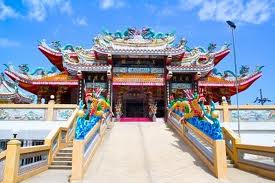
At that time, Phuket enjoyed an unprecedented surge in wealth, when tin was found to be available in large quantities. Ambitious hardworking miners and businesses flocked to Phuket and from the province South China came to the island as well. Nowadays there is still a Chinese element in Phuket cuisine, architecture, Chinese community and Chinese Temples.

Scuba Cat Diving Phuket Thailand History of Phuket

Hin Dueng Hin Mueng Liveaboard MV Scuba Adventure March 2012

Posted on April 3rd, 2012 by admin-scubacat-dw  |  Comments Off on Hin Dueng Hin Mueng Liveaboard MV Scuba Adventure March 2012

Peter and Bente from Denmark, who completed the Northern trip were joined by three French men, Alain, Bertrand and Sylvian.

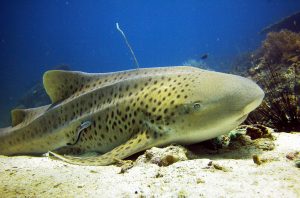
The first dive of the trip was at Shark Point. Captain Pu dropped the customers on the “shallow rock” on pinnacle two. As soon as we hit the water we were surrounded by fish. Shark Point is a beautiful dive with gorgeous soft corals, huge gorgonion sea fans and massive barrel sponges. The pinnacle was full of schools of fusiliers, snappers and yellow fin barracudas. The site lived upto it’s name by giving us the opportunity to see a large leopard shark sitting quietly on the bottom. A great photo opportunity for the divers with cameras.

Scuba Cat Diving Liveaboard Phuket Thailand

Our second dive was on Koh Bida Nai. We entered the water on the north side of the island where we dived along the wall. An ideal place for macro with many different types of nudibranch. Koh Bida Nai has a combination of sloping reef and walls, so it offers a great variety of life. There are some amazing coloured magnificent anemones all swaying in the current. The third dive was Koh Haa Islands 2 and 4. Again, a variety of topography with the walls of the Islands with a sandy patch in between. The customers, all keen photographers except Bente took the opportunity to slowly scour the walls for nudibrach, shrimps, hermit crabs and other macro critters.

The night dive was in the lagoon. Albeit a shallow dive the life was incredible with large hermit crabs walking along the bottom, flounders laying in the sandy bottom, red reef crabs and numerous lobsters. The harlequin crab was also spotted. At the back of the boat there was a huge bait ball that was attracted to the light. A perfect ending to the days diving.

Unfortunately, the weather was not kind to us and we were unable to go to Hin Daeng and Hin Muang, but this did not detract from the great diving that was to be experienced. The first dive on day 2 was the caves on Koh Haa Yai. The Cathedral has a wonderful entrance.

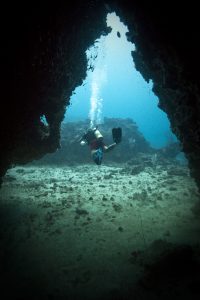
Scuba Cat Diving Phuket Thailand LiveaboardsFrom inside the cave as you look out there is a wonderful contrast of colour. The group had a great time posing for silhouette shots in the entrance of the cave. The reef has some fantastic whip and stunning soft corals. Lobsters were seen hiding in the cracks on the rocks. Nudibranchs and wart slugs were plentiful. The reef cuttlefish was also seen. The second dive was Koh Haa Neau (North Island) The corals here are unbelievable. There is a swim through that opens onto a field of lilac soft corals that look as if they have been on steroids as they are so huge. This site offers boulders with soft corals in the initial part of the dive and then onto a plate coral reef with a huge school of resident snappers. For dive 3 we headed back to Koh Bida Nok, the sister Island to Koh Bida Nai. The topography offers a combination of sloping reef and walls, so the marine life is diverse. A turtle made his appearance and was posing for the cameramen!!! The group decided to do a night dive. This was on Koh Bida Nai. The night dive was wonderful with large hermit crabs, decorator crabs were found on the walls. There was an abundance of crabs in various shapes and sizes. A huge barracuda graced us with his presence as he was hunting around the rocks.

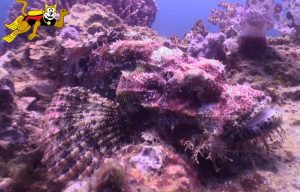
Day 3 and the first dive was on Hin Dot. This dive site is an undived treasure, definitely worth doing. The rocks are surrounded with huge amounts of fish. Often you have to part the fish to see the walls. There is a huge variety of nudibranch on this site. The highlight however, was the stone fish that was found on the wall at 9m. Talk about master of disguise!!!!!

Scuba Cat Diving Liveaboard Phuket Thailand

This site will be dived more often by us on MV Scuba Adventure. It is a gem waiting to be opened!!! Our final dive of the trip was on the West side of Koh Doc Mai. The gentle slope here with numerous crevices are homes for bamboo sharks. We managed to find 2 tucked away. In the shallows there were multiple glossidoris nudibranch . This dive was enjoyed by all and it was agreed that it was a good choice for the end of the trip.

MV Scuba Adventure Liveaboard March 2012

Posted on April 2nd, 2012 by admin-scubacat-dw  |  Comments Off on MV Scuba Adventure Liveaboard March 2012

Northern Cruise to Similan Islands and Richilieu Rock

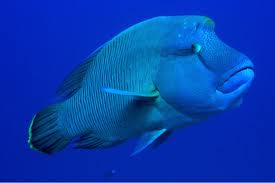
This trip left from Tap Lamu with Peter and Bente from Denmark, Emil and Patrick from Sweden and Urs from Switzerland. We sailed for a few hours to Koh Bon where we slept for the night. The first morning we had a check dive on Koh Bon Reef. Urs, who was doing his Advanced Open water course on board completed his deep adventure dive. The reef was active with beautiful schools of yellow snappers, the 2 resident golden trevellies made their appearance. The resident Napolean also made a visit.

Scuba Cat Diving Phuket Thailand Liveaboard

After breakfast Patrick did the skills for the Discover Scuba. He was very confident and managed the skills with ease. The second dive had octopus, cuttle fish, banded sea snake and a manta!!!! We decided to move to Koh Tachai where we attempted to do the Pinnacle. Unfortunately, the current was so strong that Kath couldn’t make it to the mooring line… Another time!! All was not lost as we headed to the reef where we had a gentle easy dive. The night dive was also on the Reef. Fred, the resident barracuda accompanied us throughout the dive trying to hunt by torchlight. For a predator, he is not good at catching his prey (maybe he needs glasses!!)

On day 2 we went to Richelieu Rock where we did 3 dives. Each dive was completely different. The school of barracuda were hanging around the crescent as usual. They are a magnificent sight. One of the first things we saw was a Devil Scorpion fish moving along the bottom. This dive site is an incredible place and offers so much diversity from large schools of fish to macro. Each diver really enjoyed looking into cracks and crevices to see what could be found…pipefish, shrimps, moray eels, mantis shrimps and so much more. A Devil Ray was seen at the surface during lunch. A rare sight!!! Our final dive was at Koh Tachai. Emil, Peter, Bente and Kath went onto the pinnacle with zero current. A vast change from the day before. Peter and Bente had to abort the dive. A pity, as it was truly amazing. A huge school of barracuda with hundreds of fish appeared and stayed for a while. The batfish were hanging around one of the boulders and the trevellies were menacing the snappers and fusiliers. Elaine, the Dive Master on the boat took Urs and Patrik onto the reef where they saw a turtle.

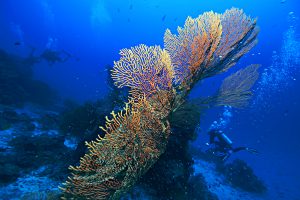
MV Scuba Adventure Sea Fan

The first dive on day 3 was on Koh Tachai. A good dive with some current. The soft corals and gorgonion sea fans are stunning. This dive site always has so much activity on it that it is difficult to put into words. You just have to experience it first hand. Our second dive of the day was on Koh Bon Reef heading towards the West Ridge. A manta made it’s appearance towards the end of the dive. Albeit a brief encounter it way still lovely to see this majestic creature. After dive 2 we headed to the Similan Islands and into Donald Duck Bay, where some of the customers went onto the beach to take photos from the view point. Urs completed his navigation dive as part of his advanced course. The natural navigation part of the dive was a dream with us finding a Green turtle sitting quietly under a rock. Our third dive on Three Trees was enjoyed by all on the boat. The reef is a sloping running reef on Island 9. There were several turtles in the shallows. We saw a Napolean Wrasse as we dropped in. Three Trees has an abundance of aquatic life. Our final dive of the day was a night dive on West of Eden. This site with the rocky formations and coral blocks is an ideal environment for many nocturnal creatures. There were plenty of lobsters, various crabs and shrimps. A free swimming giant moray was actively hunting. Always a great sight.

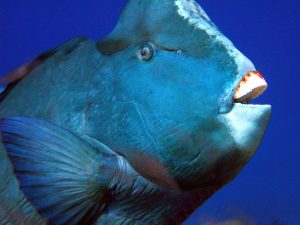
Day 4 and our final dives were on Shark Fin Reef. The South side has the most incredible rock formations. The enormity of the boulders is very imposing. During this dive we saw garden eels and numerous blue spot rays in the sand. We were lucky enough to see a huge bump head parrot fish hiding in a crack in one of the rocks. To see this fish so close was breath taking. The surgeon fish always look as if they are kissing the rock as they feed on the algae growing. Shark Fin also has the large boxfish, something that isn’t seen often on other sites in the Similans. Our final dive of the trip was on the north side of Shark Fin. Once again we saw the bump head parrotfish. The north side has rocks in the shallows and slopes gently to the bottom. A relaxing dive for the end of the trip.

MV Scuba Adventure Bump Head Parrot fish

Congratulations to Urs for completing his Advanced Open Water on the trip and to Patrik who had several dives on the Discover Scuba program. He is now bitten by the diving bug and will at some point in the future do the Open Water Course, so he can dive with his brother Emil.