Posts Tagged ‘MV Scuba Adventure’

MV Scuba Adventure Liveaboard March 2012

Posted on April 2nd, 2012 by admin-scubacat-dw  |  Comments Off on MV Scuba Adventure Liveaboard March 2012

Northern Cruise to Similan Islands and Richilieu Rock

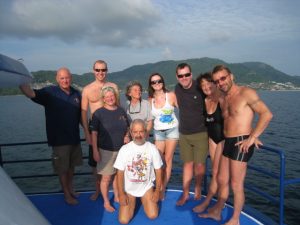
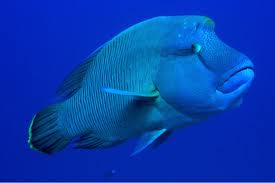
This trip left from Tap Lamu with Peter and Bente from Denmark, Emil and Patrick from Sweden and Urs from Switzerland. We sailed for a few hours to Koh Bon where we slept for the night. The first morning we had a check dive on Koh Bon Reef. Urs, who was doing his Advanced Open water course on board completed his deep adventure dive. The reef was active with beautiful schools of yellow snappers, the 2 resident golden trevellies made their appearance. The resident Napolean also made a visit.
Scuba Cat Diving Phuket Thailand Liveaboard

After breakfast Patrick did the skills for the Discover Scuba. He was very confident and managed the skills with ease. The second dive had octopus, cuttle fish, banded sea snake and a manta!!!! We decided to move to Koh Tachai where we attempted to do the Pinnacle. Unfortunately, the current was so strong that Kath couldn’t make it to the mooring line… Another time!! All was not lost as we headed to the reef where we had a gentle easy dive. The night dive was also on the Reef. Fred, the resident barracuda accompanied us throughout the dive trying to hunt by torchlight. For a predator, he is not good at catching his prey (maybe he needs glasses!!)

On day 2 we went to Richelieu Rock where we did 3 dives. Each dive was completely different. The school of barracuda were hanging around the crescent as usual. They are a magnificent sight. One of the first things we saw was a Devil Scorpion fish moving along the bottom. This dive site is an incredible place and offers so much diversity from large schools of fish to macro. Each diver really enjoyed looking into cracks and crevices to see what could be found…pipefish, shrimps, moray eels, mantis shrimps and so much more. A Devil Ray was seen at the surface during lunch. A rare sight!!! Our final dive was at Koh Tachai. Emil, Peter, Bente and Kath went onto the pinnacle with zero current. A vast change from the day before. Peter and Bente had to abort the dive. A pity, as it was truly amazing. A huge school of barracuda with hundreds of fish appeared and stayed for a while. The batfish were hanging around one of the boulders and the trevellies were menacing the snappers and fusiliers. Elaine, the Dive Master on the boat took Urs and Patrik onto the reef where they saw a turtle.
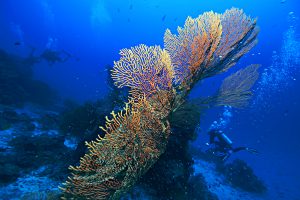
MV Scuba Adventure Sea Fan

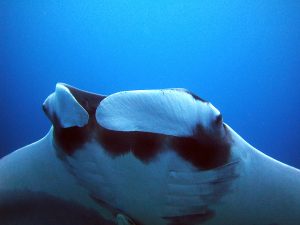
The first dive on day 3 was on Koh Tachai. A good dive with some current. The soft corals and gorgonion sea fans are stunning. This dive site always has so much activity on it that it is difficult to put into words. You just have to experience it first hand. Our second dive of the day was on Koh Bon Reef heading towards the West Ridge. A manta made it’s appearance towards the end of the dive. Albeit a brief encounter it way still lovely to see this majestic creature. After dive 2 we headed to the Similan Islands and into Donald Duck Bay, where some of the customers went onto the beach to take photos from the view point. Urs completed his navigation dive as part of his advanced course. The natural navigation part of the dive was a dream with us finding a Green turtle sitting quietly under a rock. Our third dive on Three Trees was enjoyed by all on the boat. The reef is a sloping running reef on Island 9. There were several turtles in the shallows. We saw a Napolean Wrasse as we dropped in. Three Trees has an abundance of aquatic life. Our final dive of the day was a night dive on West of Eden. This site with the rocky formations and coral blocks is an ideal environment for many nocturnal creatures. There were plenty of lobsters, various crabs and shrimps. A free swimming giant moray was actively hunting. Always a great sight.

Day 4 and our final dives were on Shark Fin Reef. The South side has the most incredible rock formations. The enormity of the boulders is very imposing. During this dive we saw garden eels and numerous blue spot rays in the sand. We were lucky enough to see a huge bump head parrot fish hiding in a crack in one of the rocks. To see this fish so close was breath taking. The surgeon fish always look as if they are kissing the rock as they feed on the algae growing. Shark Fin also has the large boxfish, something that isn’t seen often on other sites in the Similans. Our final dive of the trip was on the north side of Shark Fin. Once again we saw the bump head parrotfish. The north side has rocks in the shallows and slopes gently to the bottom. A relaxing dive for the end of the trip.
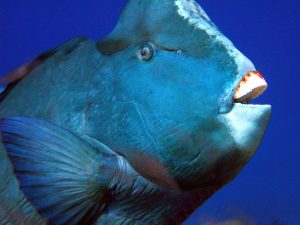
MV Scuba Adventure Bump Head Parrot fish

Congratulations to Urs for completing his Advanced Open Water on the trip and to Patrik who had several dives on the Discover Scuba program. He is now bitten by the diving bug and will at some point in the future do the Open Water Course, so he can dive with his brother Emil.
Whats New at Scuba Cat Diving?

Posted on April 1st, 2012 by admin-scubacat-dw  |  Comments Off on Whats New at Scuba Cat Diving?

Scuba Cat Diving was been based on the beach road of Patong for the past 18 years, but this year, things changed.

Scuba Cat Diving  5 * CDC Phuket Thailand

New Locations

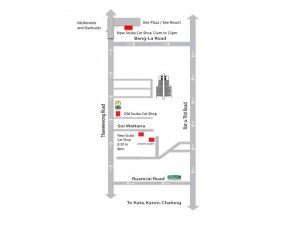
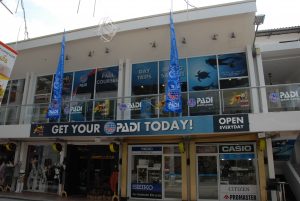
A move away from the tuk tuks, tailors, massage parlours and Muay Thai advertisements (yes those of you who have already been to see us will recall “Monday Night, Monday Night……….” )to a new location inside the Kee Plaza, a fantastic hotel and shopping facility 200m off of the Beach Road. This has enabled us to have a larger retail selection, much more selection for our customers to choose from Scubapro, Aqualung and many more.

Scuba Cat Diving Phuket Thailand Kee Plaza Patong

Kee Plaza

We have  kept our classrooms in Soi Watanna but opened a second shop putting retail and booking’s on the ground floor, this has allowed us to have our dive centre at both ends of Patong so is more convenient for you all. Our fun pub has moved to the roof top terrace we created this year.

Scuba Cat Diving Phuket Thailand Soi Watanna Patong

Meet the team

It has been a different 6 months but things are progressing well.

Scuba Cat Diving, 5 * CDC is still under British ownership and management and they have the only female Course Director, Sarah Kench, conducting monthly IDC’s on Phuket. Along side this we are the only DDI (Disabled Diver International) Instructor Trainer Centre in Asia.

Scuba Cat has a long history of being eco aware, from laying artificial reefs, becoming the first National Geographic Centre in Phuket, bi-annual underwater clean ups and winning awards from Project AWARE. This is consolidated with our 5 year commitment to monitor reefs at a local island in conjunction with reef check trainers from China on a yearly basis as we are the only reef check centre on Phuket. Recently we won the Green Star Award, the first dive centre to achieve this on Phuket and quickly followed it up by becoming the first Dive Centre in Phuket to go 100% Aware.

Following the changes we made on the retail side of the business this year Scuba Cat has also made changes in the type diving we are offering.

As always we conduct our courses to the highest standards, with emphasis on quality rather time. IDC’s are available every month along with DSAT Tech diving up to Instructor level.

We are  running 3 Diving boats this year, all of which will have Nitrox available and limited numbers of divers on them, this will enable us to have 3 different schedules which will suit all divers and snorkelers.  Whether you are a snorkeller, brand new to diving or looking to change your life by joining us working in Paradise, no problem, we have a program to suit you and your whole family.

Daytrips to the local islands around Phuket on board MV Scuba Fun will run 3 dives per day at different locations. New for this year there will be freshly cooked meals from our own kitchen cooked by the awesome Chef from Lair Le Tong Restaurant.

Half day trips to the local reefs of Phuket on MV Scuba Sport, new for this year allowing boat diving on mornings, afternoons and night dives. Sightings on the reefs have been beyond our expectations, with things we have not seen around Phuket in many years, the most recent being a free Swimming Ribbon Eel.

Our liveaboard MV Scuba Adventure will run trips to both the North Andaman and South Andaman this season, allowing for 3, 4 or 7 day trips offering the best diving Thailand has to offer. As always she offers un-crowded conditions, by having reduced numbers on the boat and is run by our own Tour leader Kath Ridley and the best Captain and Crew on Phuket. A brand new schedule is being launched for the summer and next high season to give you even more variety.

A new IDC website created by our website designers dedicated to professional level courses and Internships will be launched very shortly.

Hin Dueng Hin Mueng Liveaboard – MV Scuba Adventure

Posted on February 3rd, 2012 by admin-scubacat-dw  |  Comments Off on Hin Dueng Hin Mueng Liveaboard – MV Scuba Adventure

8th to 11th DECEMBER 2011

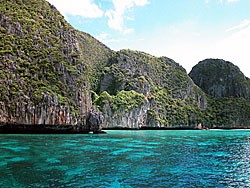
Lucrezia, Rene, Guido and Gianna who had completed the previous trip to the Similans on board MV Scuba Adventure were joined by Thomas from Switzerland and Richard from Holland for the Southern trip. With supplies loaded we headed to Maya Bay, Phi-Phi where we spent the night. With the briefings completed we had our first dive on Koh Bida Nai. Captain Pu dropped us on the wall area. Amongst the group were many photo enthusiasts, so we took our time looking for macro critters on the wall area. Visability was good, so the schools of fish slightly into the blue were seen.

After breakfast we dropped in 2 groups on Koh Bida Nok as we used the dinghy. Again, the wall area was the highlight of the dive again looking for the nudibranchs, shrimps, lobsters, morays and anything that was photogenic! The sloping reef area with the carpet of anemones was home for mantis shrimps, giant morays and a school of yellow stripped snappers. The dinghy picked up the divers and unfortunately Jack, a crew member, went for an unexpected swim when he tried to get Kath out of the water.

Scuba Cat Diving Phuket Thailand Phi Phi

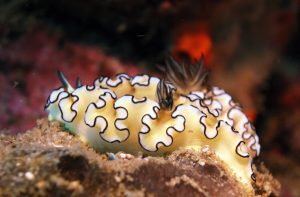
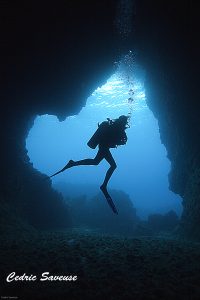
We then headed to Koh Haa for our third dive of the day at the Cathedral on Koh Ha Yai. We dropped in directly in front of the caves. We entered cave 2 and then swam through the connecting hole into cave 3. Looking through the hole is quite a sight as the remaining divers swam through.  The light was incredible. Once in cave 3 the fun started with the photographers trying to get the silhouette shot in the cave entrance. Lucrezia was using her new camera and had some successful shots. In the swim through there was a beautiful nudibranch , which was the first of many on that dive. Going across the plateau through the whip coral garden and on to the boulder area with the beautiful soft corals was a pleasure.  The night dive was on Koh Ha Yai with Robert and Kath. The other customers decided to relax with a beer. The night dive was very tranquil and many different types of crab were seen, but the highlight was an anemone crab that was sat on top of a coral formation. Lion fish were out hunting and a giant free swimming moray gave a performance for us.

Scuba Cat Diving Phuket Thailand Koh Ha

Day 2 was the highlight of the trip. The first dive was on Hin Muang otherwise known as Purple Rock due to the abundance of purple soft coral. Here we were not looking primarily for macro as the bigger picture is magical. The atmosphere on this dive site is an experience. With hardly any current it was easy to navigate without too much effort. The hunters were out and you could feel the tension as they circled the smaller fish.

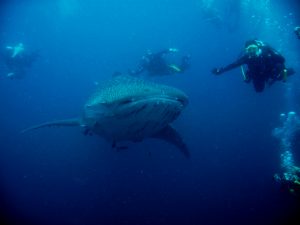
The second dive was on Hin Deang, otherwise known as “Red Rock” as there are many red soft corals. Thank you to Richard, who drew the dive site map. With the sloping reef area and the vertical walls this dive site has a variety of topography. Again, a great dive with trevellies, emperors, rainbow runners, tuna and barracuda. At the end of the dive a thermocline came in as Kath, Richard, Gianna and Guido were heading to the safety stop. Then through a wall of damsel fish and fusiliers came the big boy….A whale shark about 5m in length. Richard was off like a rocket and managed to get the magnificent creature on video. Needless to say that the third dive of the day was on Hin Deang. During the briefing “X” marked the spot on the map where the whale shark had been spotted. When we descended we swam over to the area and there it appeared. Whale sharks are directional and unlike manta’s do not swim in circles, so we only had a few moments with it, but when seeing something of this magnitude every second counts!!

Scuba Cat Diving Phuket Thailand Whale Shark

The 4th dive of the day was a sunset dive on Koh Ha Neau. The current was very strong, so we were only able to swim around the rocks as it would have been endurance to get to the reef. Again we were on a mission to find macro. The boulders are covered in soft corals of different colours. This area also has many anemones that start to close at this time of day revealing their different colours including white, green, shades of blue and purple. At the end of the dive we swam up the chimney, which starts at 16m and finishes at 5m, an ideal place to do a safety stop. While we were waiting on the surface to be picked up by Captain Pu and the crew we saw a gorgeous sunset that was worthy of a photograph.  Back on the boat we headed to Phi Phi and Tonsai Bay where we went ashore for a couple of hours to have a few drinks on the beach and watch a fire show.

Scuba Cat Diving Phuket Thailand Phi Phi

Day 3 and we decided that we would dive the wall not far from Maya Bay. A relaxed, chilled dive with plenty of fish and corals. We had the pleasure of a turtle towards the end of the dive. He was quite happy having his photograph taken and even posed for us!!! The last dive of the trip was on Shark Point. Good visability and little current made this one to remember. There was a promise of a Sea Horse and thankfully, Kath found it. Again, the photographers were in their element as we were the only divers on the site. The whole dive was on pinnacle one as there was so much to see. This beautiful dive site has varied marine life, huge barrel sponges, gorgonion sea fans and lots of soft coral. The scenery it’s self is stunning.

Once again, we had a fantastic trip.

MV Scuba Adventure Liveaboard – 4th to 8th December 2011

Posted on February 1st, 2012 by admin-scubacat-dw  |  Comments Off on MV Scuba Adventure Liveaboard – 4th to 8th December 2011

North Andaman Liveaboard –  Similans, Koh Bon, Koh Tachai  and Richilieu Rock MV Scuba Adventure departed from Patong on the evening of the 4th en-route to the Similans. Kath, the Tour Leader and Steve, the Dive Master welcomed on board Lucrezia and Rene from Switzerland, Mats from Sweden, Guido and Gianna from  Italy and Peter and Karen from England. With the boat briefing completed, cabins allocated, equipment set up we had a relaxing dinner where everyone became acquainted.

Scuba Cat Diving Phuket Thailand Similan Liveaboard MV Scuba Adventure

We woke to the beautiful scenery of Island 5 and 6, which is the home of Anita’s Reef. With the dive safety and dive sight briefing done we kitted up for our first dive of the trip. Anita’s reef did not disappoint. The stunning coral bommie was covered in glass fish, which was a sight to be seen. Nudibranch, Fusiliers, Snappers were all out in their glory. The pristine white sand was home to the dancing Garden Eels and Khuls rays.  A banded pipe fish was found on one of the large boulders on the corner of Island 5.  After breakfast we headed to Island 9 and North Point. This site is a combination of huge rock formations and reef. It is briefed as “but one get one free!!”  The rocky formation has several swim throughs together with coral gardens nestled between the rocks.   Turtles were in abundance as they poised for the photographers in the group. The turtles here are not at all shy and continued munching away as if to say”Oh they’re only divers!”   We also saw a banded sea snake head to the surface for air. In the shallows a rock formation was covered in Purple Dragon Nudibranch. A treat for the macro lovers on the boat.

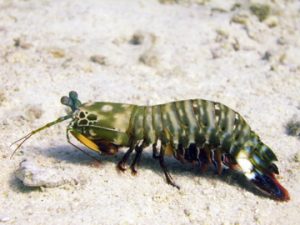
After lunch we arrived at Koh Bon for our 3rd dive of the day. We were fortunate as we were the only divers in the water at this popular sight. We dropped in on the corner and made our way to the West Ridge. A large school of yellow snapper were below us as we reached the ridge. On the ridge there were hunting Long Nosed Emporers, Trevelly and Rainbow Runners.  A Devil Scorpion was camouflaged amongst the broken coral on the reef.  A meter away was an octopus hiding in a rock. There was so much to see!!! The glass fish again, were food for the larger hunters…a feeding frenzy. A Mantis Shrimp quickly ran across the reef, which was a first for some of the divers.

Scuba Cat Diving Phuket Thailand Mantis Shrimp

A highlight of the dive was to see 2 Napolean Wrasse swimming around us for a while.  The divers who chose to do the night dive on Koh Tachai Reef saw many different types of crabs, shrimps and spent about 10 minutes with a free swimming moray, which hunted successfully catching an unsuspecting fish for dinner!!

Day 2 and the Captain started the engines at 3.40am. We were on our way to Richelieu Rock. Here we did 3 dives. The Rock is worthy of multiple dives as the marine life here is so prolific. A school of giant barracuda were waiting our arrival! Fortunately, we were able to locate a sea horse and 2 ornate ghost pipe fish.  Cuttle fish were in abundance as they displayed their courtship ritual. The whole area was like being in fish soup with large schools of fish swimming around us. Cleaner pipe fish were found in the crevices, mantis shrimps along the bottom hiding and a devil scorpion camouflaging itself as a piece of coral. Needless to say there were many more creatures too numerous to mention. One highlight was seeing a zebra moray free swimming in the shallows.

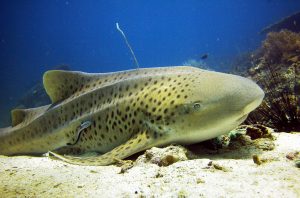
The 4th dive of the day was a sunset dive at Jetski Rock on Koh Tachai. A chilled out relaxing dive. The trevellies were in menacing hunting mode as they circled the glassfish on the reef. They are truly the “Gangsters” of the reef. A moray was enjoying being cleaned by a cleaner shrimp as the surrounding marine life prepared for bed. The sunset when we surfaced was spectacular and gave the perfect ending to a great day. Day 3 started with the morning dive on Koh Tachai Pinnacle. With a slight current it was easy navigate around the site.  The corals on the pinnacle are beautiful. Soft corals, gorgonion sea fans, whip coral are abundant.  A few barracuda were hanging above the site and the resident bat fish were between two huge boulders. Rene and Lucrezia were lucky and saw a leopard shark. They did have photographic evidence, so we had to believe them!!

Scuba Cat Diving Phuket Thailand Leopard Shark

The second and third dives were on Koh Bon. Hunters were menacing as they circled amongst the glass fish and then without warning a feeding frenzy. The third devil scorpion fish of the trip was also seen. However, the icing on the cake at Koh Bon was the manta on dive 2. We were in the shallows coming towards the end of the dive when the manta appeared. This amazing creature brought smiles to all our faces as it approached us several times. Dive 4 was a sunset dive in the Similans and on West of Eden on Island 7. This dive was relaxing as we slowly worked our way along the reef swimming between the coral blocks. Glass fish in abundance, feather stars in every colour and an array of fish. Day 4 and an early start on Elephant Head Rock and boy oh boy did it pay off…..As soon as we dropped in we had a white tip reef shark laying on the bottom at 20m. As we approached it swam away. However, several minutes later we saw two side by side. Elephant Head has some lovely swim throughs and one of the white tips swam into it. Kath was the only diver to see this. The huge granite boulders with the coral gardens between are very impressive. The second dive on Shark Fin Reef was an easy dive for the end of the trip. Shark Fin reef has dramatic scenery of huge granite boulders. In one of the long cracks in a rock there resting was a Jenkins Ray. Further along the reef we saw a large school of giant barracudas. This was the first trip of the season to the Similans and Richelieu Rock and if this trip was anything to go by then we should have a wonderful season.

Marine Life of Phuket – Octopus

Posted on January 31st, 2012 by admin-scubacat-dw  |  Comments Off on Marine Life of Phuket – Octopus

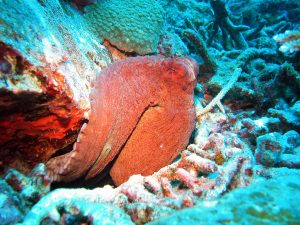
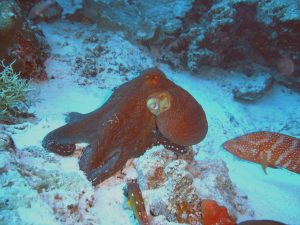
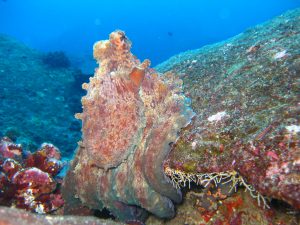
Octopuses are the master of disguise on a reef. Many times someone may be pointing at apparently nothing and then as with a 3D photo and octopus appears!!!! This remarkable creature is compelling watching as it changes colour and texture. Camouflage is possible due to specialized skin cells that can change colour, opacity and reflectiveness of the epidermis. It is believed that the colour changing is a means of communicating with others and also to warn of danger. The muscles in the skin enables the octopus to alter the texture of it’s mantle so as to blend in with it’s surroundings, for example, the bumpy texture of a rock. There is also evidence to suggest that octopus living on a complex habitat such as a reef and are more active during the day have a more developed skin than the sand dwelling and nocturnal partners.

Scuba Cat Diving Phuket Thailand  5 * CDC

There are 300 recognised species of octopus worldwide. All are known to be venonmous, but only the blue ringed octopus is deadly to humans. Octopuses have 4 pairs of arms and 2 eyes and are bilaterally symmetric. There is no internal or external skeleton, which enables the creature to squeeze through small spaces if fleeing from predators. They are regarded as the most flexible and intelligent of all invertebrates having both having long and short term memory.  There is only one hard part of the body, this being the beak, or mouth that is found at the centre point of the arms.

Octopuses have very good eye sight and some species are able to distinguish colour. They are also able to distinguish the orientation of their body to the horizontal using two organs that are attached to the brain called statocysts. There is also an automatic reponse that keeps the eyes orientated, so that the pupil slit is always horizontal.

Scuba Cat Diving Phuket Thailand Thailand Liveaboards

The sense of touch is excellent and the suction cups found on the arms have numerous chemoreceptors that enable the octopus to taste what it touches. The arms also show a variety of complex reflex actions. This is due to 2/3 of the neurons of the complex nervous system being located there. The arms also have tension receptors, so the octopus can determine if the arms are stretched out, but the receptors are not sufficient for the brain to determine the actual position of them.

This creature also has three hearts, two are branchial hearts that pump blood to each of the two gills and the third pumps blood through the body.  The blood contains a copper rich protein called hemocyanin, which is effective for transporting oxygen in cold conditions and environments where there is low oxygen pressure. The protein is dissolved in the plasma and gives the blood a bluish colour.

The life expectancy of the octopus is short from 6 months to 5 years. The death of the octopus is genetically programmed and results after reproduction. The male of the species may live for a few months after mating, but the female will die shortly after the eggs are hatched.  During reproduction the male will insert a specialised arm called a hectcotylus into the female’s mantle where it deposits spematophore (packets of sperm). Some species can keep the sperm alive inside the female for a few weeks until the eggs are mature. Once fertilization occurs the female will lay her eggs, which she hangs in strings from her lair or individually on the substrate. This varies depending on the species.  A female may lay upto 200,000 eggs. The incubation period is approximately a month. During this time she is the protector and will gently blows a current of water across the eggs providing them with enough oxygen. However, it is to her detriment as she will not hunt. It has been known for the female to ingest one or more of her arms for sustenance.  Once the eggs are hatched she will leave being very weak and defenseless thus dying.  The larval octopus will drift for a while in clouds of plankton where they feed. . Plankton eaters such as mantas and whale sharks are obviously a threat to the larvae. When they are ready they will descend to the ocean floor.

Scuba Cat Diving Phuket Thailand Plankton Eater

Octopuses move by crawling on their arms or by swimming. They swim in a horizontal position with the arms behind. Movement is by expelling a jet of water from a contractile mantle. This is one of the primary defense mechanisms as they are capable of fleeing at great speed. Another form of defense is the use of thick blackish ink, melanin, which is dispersed in a cloud. It is believed that the ink reduces the olfactory organs of some hunters that hunt by smell, for example, sharks. It is also known that an octopus is capable of detaching an arm as a distraction when under attack.  The mimic octopus is highly flexible and is able to change shape to look like other creatures. It has the capability of changing to look like a more dangerous creature than the one that is attacking.

These remarkable sea creatures are worthy of watching while on a dive. If you are lucky enough to see one then do not get too close as the octopus will hide in crevices and cracks in the substrate. It is better to observe from a distance away and slightly elevated. Be patient and wait motionless. The octopus will eventually gain confidence and gradually come out into the open for you to enjoy the moment!!!!

Scuba Cat Diving Phuket Thailand Similan Liveaboard

If you would like to know more about the identification of species why not sign up for on a  Underwater Naturalist Specialty Course, which will enhance your knowledge and highlight the key things to look for, or a cruise on board MV Scuba Adventure or MV Scuba Fun for a chance to see these for yourself.